
Black College Students in Plainfield and Irvington Confront Graduation Challenges Amid Economic Strains |
Financial Hurdles and Policy Shifts Threaten Educational Attainment in New Jersey Communities |
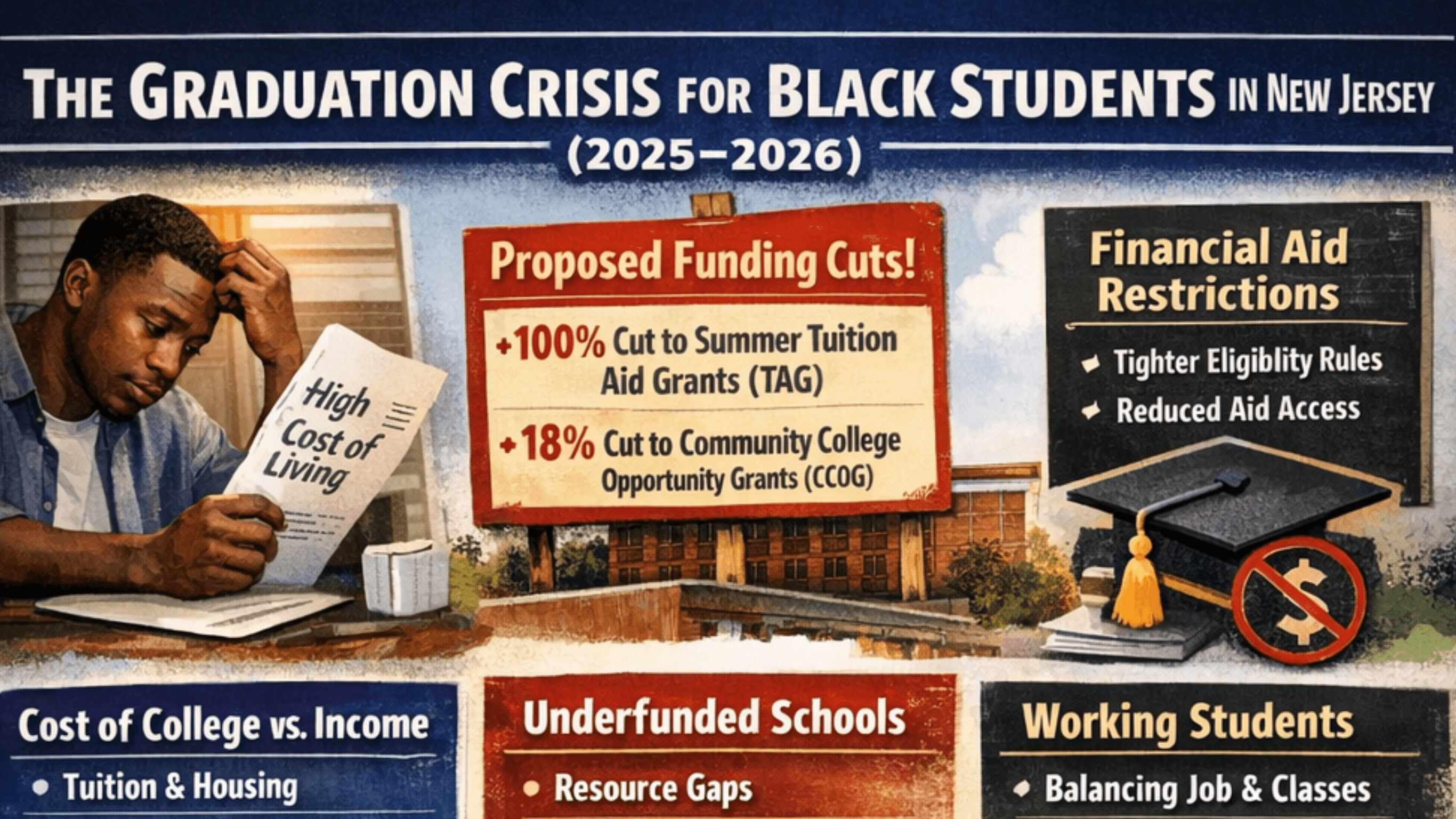
In the 2025–2026 academic year, Black college students in Plainfield and Irvington, New Jersey, are grappling with significant economic challenges that jeopardize their ability to graduate. The escalating cost of living, proposed state funding cuts to higher education, and potential reductions in financial aid are creating formidable obstacles for these students.
The proposed Fiscal Year 2026 budget includes a $400 million reduction in higher education funding, marking a 16.1% decrease from the previous year. This cut threatens essential student services such as mental health support, tutoring, and career counseling, which are vital for student success. Additionally, the elimination of the Summer Tuition Aid Grant (TAG) program, which previously assisted around 13,000 students, may force many to delay graduation or accrue additional debt. ([highereducationinquirer.org](https://www.highereducationinquirer.org/2025/06/new-jersey-austerity-plan-means-400m.html?utm_source=openai))
Financial aid eligibility is also tightening. Starting in 2025–2026, new students with adjusted gross incomes exceeding $65,001 will no longer qualify for certain tiers of the Garden State Guarantee (GSG) or Community College Opportunity Grant (CCOG). While current beneficiaries are grandfathered in, this change reduces access for future students. ([njcommunitycolleges.org](https://www.njcommunitycolleges.org/news/fact-sheet-critical-need-for-state-investment-in-community-colleges-in-the-fy-2026-state-budget/?utm_source=openai))
The total cost of attendance at New Jersey's public four-year institutions continues to consume a substantial portion of the median household income for Black families. This financial burden creates significant barriers, especially for non-traditional students who must cover housing and food expenses alongside tuition.
A 2025 report revealed that four in five Black and Latino students in New Jersey attend underfunded, under-resourced schools. This lack of resources contributes to lower graduation rates—54% for Black students at four-year institutions compared to 72% for their white peers—and higher dropout rates. ([njurbannews.com](https://njurbannews.com/2025/10/30/report-finds-most-black-and-latino-students-attend-underfunded-schools-in-nj/?utm_source=openai))
Many Black students in New Jersey work while attending school. A 2024 survey indicated that over 50% of working students found their jobs interfered with their studies, increasing the risk of dropping out.
Federal policy shifts in 2025, including changes to student debt relief and the potential elimination of diversity, equity, and inclusion (DEI) initiatives, are expected to exacerbate financial instability for Black students. The combination of these factors disproportionately affects Black students, who are more likely to rely on Pell Grants and incur higher student debt. While initiatives like the "Some College, No Degree" (SCND) program in New Jersey have helped many re-enroll, ongoing financial strains, including rising tuition and living costs, continue to hinder many from reaching graduation.
In response to these challenges, community leaders in Plainfield and Irvington are advocating for increased state investment in higher education and the preservation of financial aid programs. They emphasize the need for policies that address systemic disparities and support Black students in their pursuit of higher education. |
0 Comments
Join the conversation
Be the first to comment
Share your thoughts above.